The Difference Between a Chatbot and a Supply Chain Agent
When most operators hear "AI for supply chain," they picture a chatbot. A clever search box over their ERP data. Type a question, get an answer. That is useful. It is also not what is coming.
An agent is different. An agent does the work and brings you the decision.
The easiest way to see the difference is to look at the same Monday morning two ways.
Monday, Version One
Your planner walks in with coffee. She opens the inventory dashboard and notices a key SKU is three days from stockout. She checks the PO log. Nothing moving. She calls the supplier. Lead time has slipped from 14 days to 28. Now she is reworking commit dates, calling the customer to reset expectations, and pulling forward an expedite with a backup vendor.
She lost the morning to something that should have been flagged four days ago. The signal existed. Nobody was watching the channel where it appeared.
Monday, Version Two
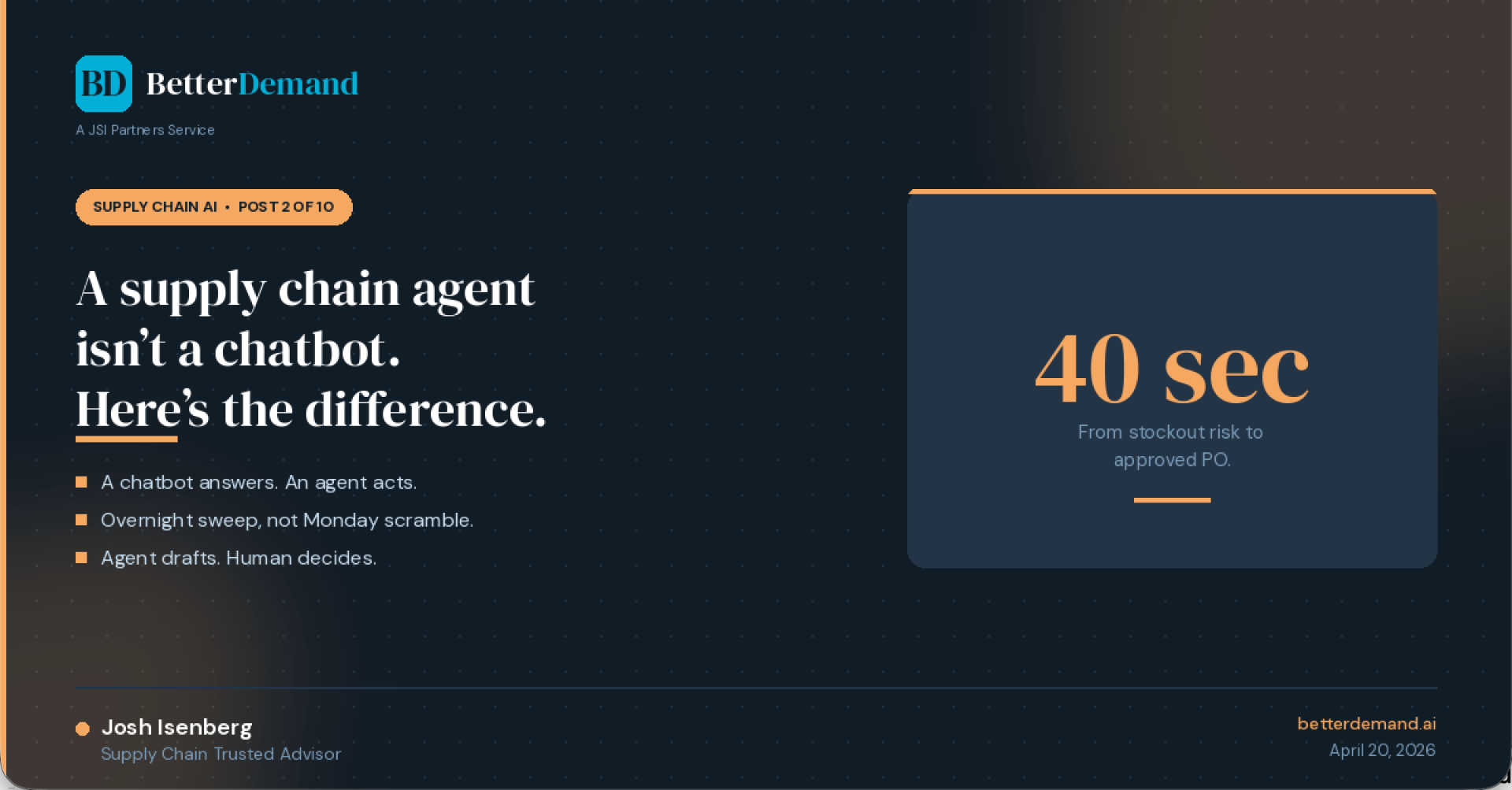
Your planner walks in with coffee. She opens the approval queue. Overnight, her agent swept every SKU, checked current lead times against coverage, caught the same stockout risk, and drafted a replacement PO with the alternate supplier. The reasoning is attached. She reads it, agrees, clicks approve. Forty seconds.
The rest of the morning is hers to spend on real planning work, not firefighting.
Chatbot vs. Agent in Plain Language
A chatbot sits and waits for you to ask it something. It is only as useful as your ability to remember to ask the right question at the right time. That works for reference lookups. It does not work for a supply chain that is changing while you sleep.
An agent does not wait. It runs on a schedule. It monitors inventory positions against lead times. It checks supplier communications and lead-time updates. It watches for demand signals that would blow through your current coverage assumptions. And when it finds something that needs a decision, it does not just alert you. It drafts the decision and puts it in a queue, with the reasoning visible, ready for you to review and approve.
Why the Approval Queue Matters
The approval queue is the most important design choice in all of this. The agent never acts autonomously on a $200K purchase order. It drafts and surfaces. A human reviews and approves. That is how trust gets built over time, and it is how good planners keep their judgment at the center of operations.
Why This Matters More at Mid-Market
A Fortune 500 supply chain team has twenty planners. Specialists for forecasting, for supplier management, for exception handling, for material requirements planning. Signals get caught because someone is always looking.
A $50M manufacturer has two planners doing all of that, plus customer calls, plus whatever came up this morning. Signals do not get caught because nobody has the bandwidth to watch every channel every day. An agent changes that math. It gives one planner the coverage of a full team without the overhead of one.
What would your Monday morning look like if nothing got caught late?
Ready to Forecast Smarter?
BetterDemand combines AI-powered forecasting with real supply chain expertise. Visit betterdemand.ai to learn how we help distributors and manufacturers plan with confidence.