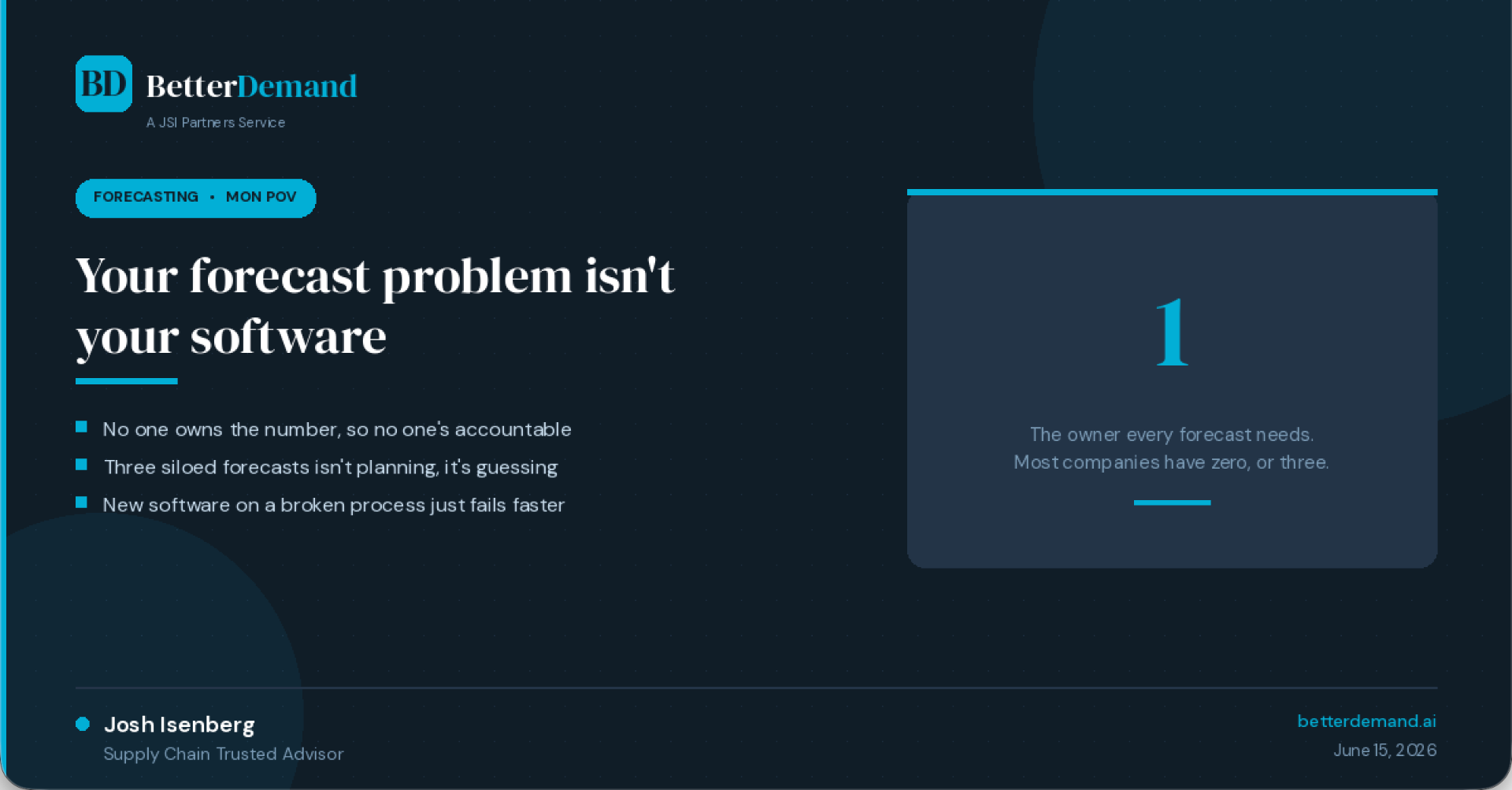
Your Forecast Problem Isn't Your Software
Most mid-market companies don't have a forecasting software problem. They have an ownership problem, and no new tool will fix that.
I've watched companies spend six figures on planning systems and end up with the same accuracy they had in spreadsheets. The software wasn't the issue. Nobody owned the number. Sales had their forecast, finance had theirs, operations quietly built a third, and the "official" forecast was whatever got typed in before the deadline. The technology changed. The outcome didn't.
A Forecast Is a Decision, Not a Report
A forecast isn't a math output. It's a decision about what the business is going to do, made by people who can be held to it. When no one owns it, accuracy stops being a metric anyone is accountable for and becomes a report nobody reads. The plan exists, but it doesn't drive purchasing, staffing, or cash decisions, because everyone privately knows it isn't really anyone's number.
That's the trap. You can buy the best planning system on the market and bolt it onto an organization where three departments quietly disagree about demand, and all you've done is generate a more sophisticated version of the same disagreement.
What Companies That Forecast Well Actually Do
The companies that forecast well usually aren't running fancier algorithms. They've made a few unglamorous decisions and stuck to them. They've named who owns the number. They've set how often it gets revisited and who sits at the table when it does. And they've agreed on what happens when reality drifts from the plan, so a miss becomes a question to answer rather than a cell to overwrite.
This is the heart of a working sales and operations planning process. It isn't a meeting on the calendar. It's a standing agreement about who decides, how often, and on what evidence. Tools can make that process faster and more visible, but they can't create it.
Fix the Process First
Better tools genuinely help, but only after the process exists for them to plug into. Software applied to a broken process just gives you wrong answers faster, and with more confidence. The honest first step for most mid-market operators isn't a software demo. It's a hard conversation about who owns the forecast and what authority that ownership actually carries.
Fix who owns the forecast before you shop for what generates it. The accuracy gains you're chasing are usually sitting in that decision, not in the next platform.
Ready to Forecast Smarter?
BetterDemand combines AI-powered forecasting with real supply chain expertise. Visit betterdemand.ai to learn how we help distributors and manufacturers plan with confidence.