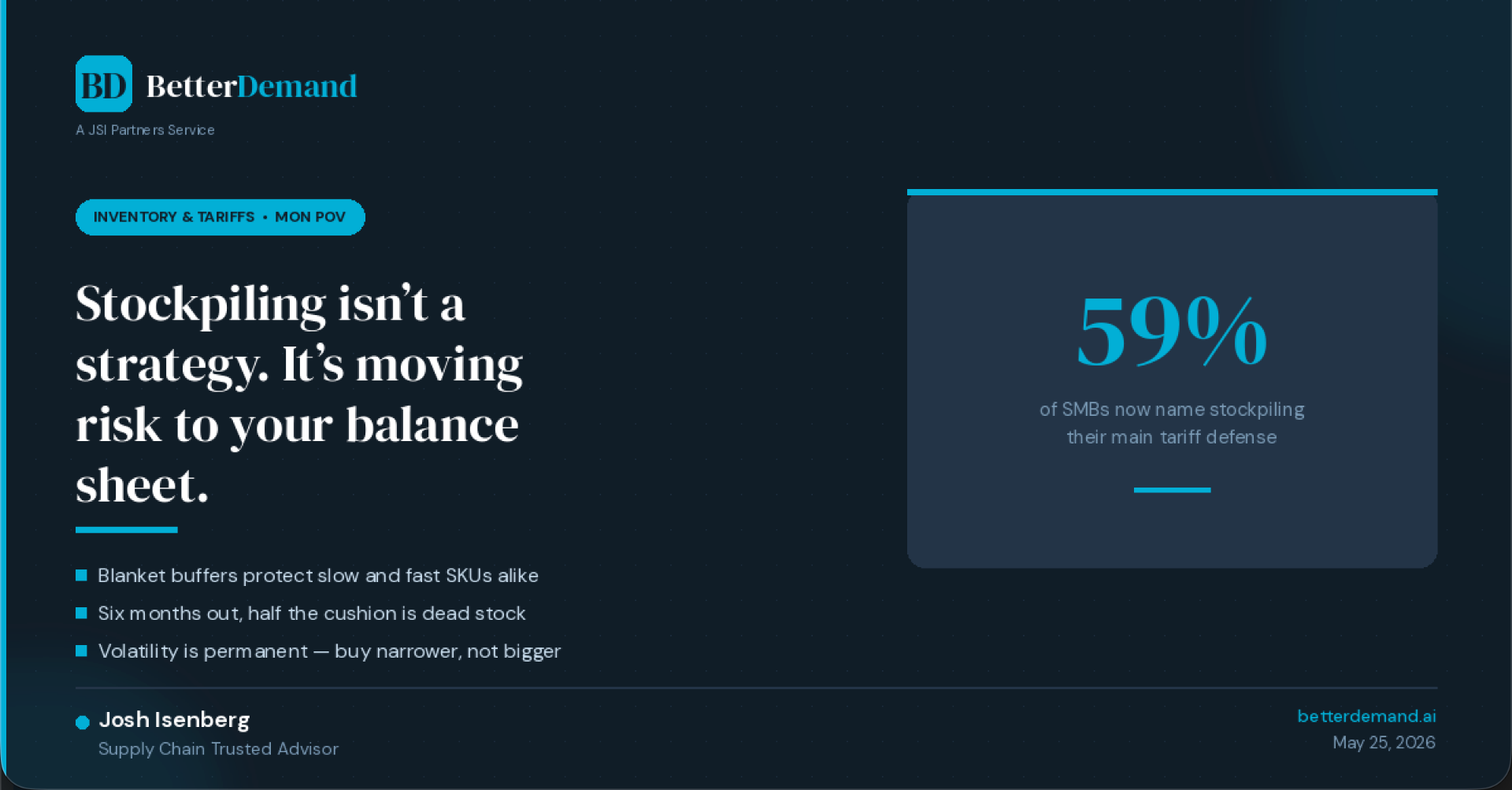
Stockpiling Isn't a Tariff Strategy — It's a Balance Risk
New survey data shows 59% of small and mid-sized companies now name stockpiling inventory as their primary defense against tariff volatility. The problem: blanket safety stock doesn't reduce risk, it just moves it from your supply chain to your balance sheet. Here's the smarter operator move.
The Default Tariff Playbook Is Broken
A 2026 survey of small and mid-sized businesses landed this week with a number worth sitting with. 96% of SMBs say tariffs have hurt their shipping, sourcing, or supply chains in the past year. And when asked what they're doing about it, 59% named the same answer: stockpile inventory.
That's not a strategy. That's an instinct dressed up as one.
I get the appeal. Stockpiling feels like control. You can see the pallets. You can count the safety stock. You can walk the board through a chart of weeks-of-cover and look like you've handled it. The problem is what blanket buffering actually does to a business when you measure it six months out.
The Hidden Cost of Blanket Safety Stock
Buying broad protection treats every SKU like it carries the same exposure and the same demand. It doesn't. Your top movers get a little extra cover, which is fine. But you also tied up working capital in the long tail — the SKUs with slow turns, soft demand signals, and zero tariff exposure to begin with.
Fast forward two quarters. Half of that cushion has aged into dead inventory you'll either mark down, dispose of, or quietly let sit on the balance sheet until someone in finance notices. Meanwhile, the SKUs that actually mattered — the ones with real volatility and real customer demand — are still short, because you spread the dollars too thin.
The cost isn't just the markdown. It's the cash you couldn't deploy somewhere else.
What Mid-Market Operators Do Differently
The companies handling this well aren't buying more. They're buying narrower.
They've done the segmentation work to know which 20% of their catalog actually faces real tariff exposure and real, defensible demand. They put their working capital there — sometimes deep, sometimes very deep. Everything else stays lean. Some SKUs they intentionally run thinner than usual, because they'd rather take a stockout on a slow mover than fund safety stock that's never going to be needed.
This requires two things most mid-market companies don't have set up well: a clean read on which SKUs are actually exposed (not just "imported"), and a forecast they trust enough to commit working capital against.
Why This Won't Snap Back
Here's the part nobody at industry conferences wants to say out loud: the tariff environment isn't reverting to "normal." Volatility is the new floor, not a passing event. Multiple sources of disruption — trade policy, geopolitics, demand whiplash from end markets — are stacking on top of each other.
When volatility is permanent, a bigger buffer just makes you slower and more expensive than the competitor who can see demand clearly. You can outspend uncertainty for a quarter or two. You can't outspend it for three years running.
The Question to Ask Your Team This Week
If you walked the warehouse with your CFO right now and asked, "what percent of our safety stock is protecting SKUs that don't actually need protection," would anyone be able to answer? In most mid-market companies, the honest answer is no.
That's the gap. The answer to an unpredictable input isn't more stock. It's a sharper read on what's actually coming.
Ready to Forecast Smarter?
BetterDemand combines AI-powered forecasting with real supply chain expertise. Visit betterdemand.ai to learn how we help distributors and manufacturers plan with confidence.