Why Eliminating Shipments Beats Negotiating Freight Rates
The Rate Negotiation Trap
Every year, the same cycle plays out. Freight rates climb — LTL carriers pushed rates up 5-8% heading into 2026 — and procurement teams scramble to renegotiate contracts. They squeeze a few points out of their carriers, call it a win, and move on.
Meanwhile, their planning teams continue generating the same fragmented, high-frequency shipment patterns that are the actual driver of their inflated freight spend. The real savings aren't hiding in your carrier contracts. They're hiding in the shipments you're making that you don't need to make.
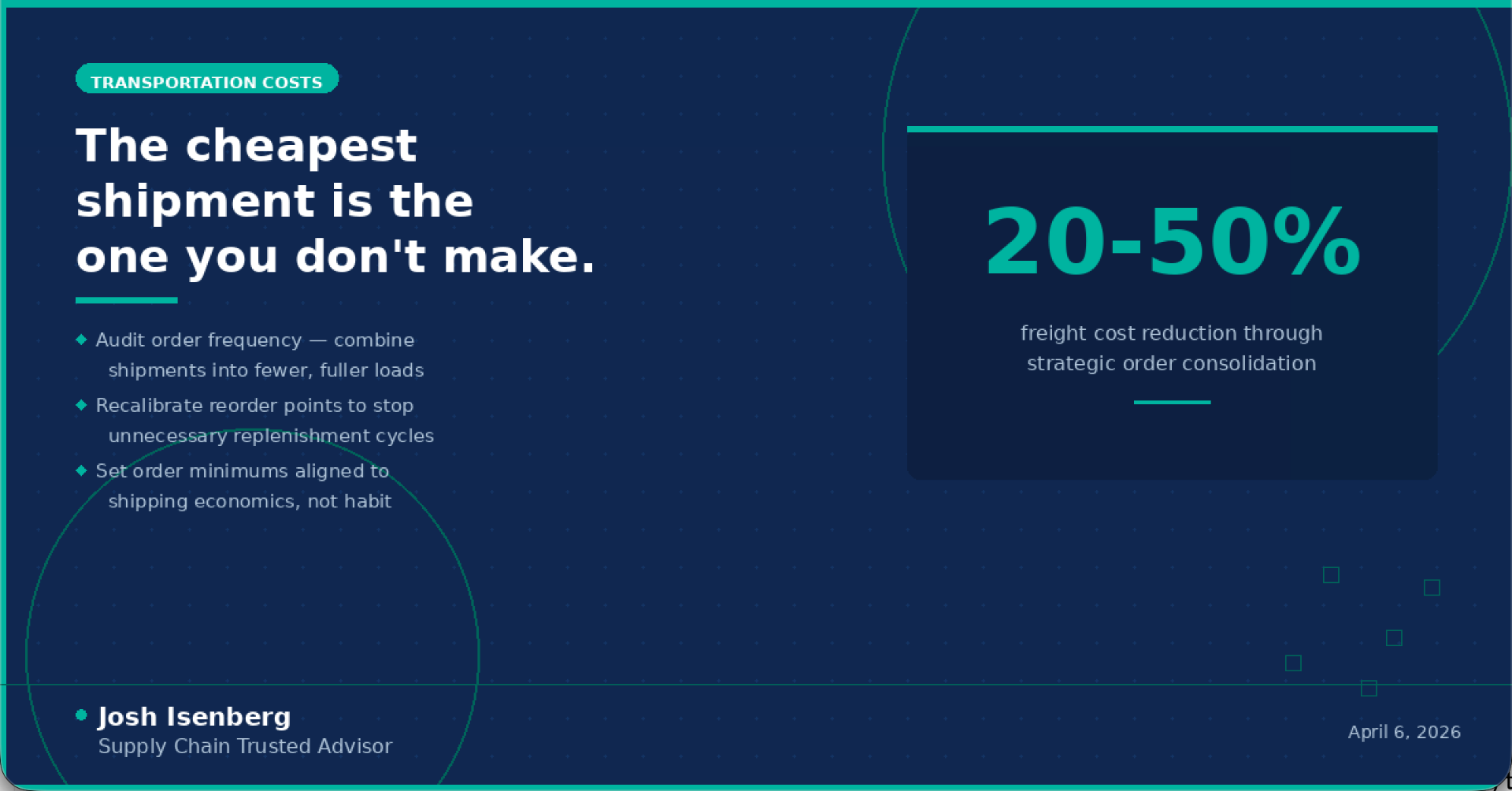
Strategic freight consolidation — combining fragmented orders into fewer, fuller loads — can reduce transportation costs by 20-50%. One food manufacturer saved 40% on freight in just six months by consolidating shipments, amounting to $315,000 in savings. That's not a rounding error. That's a structural cost advantage.
Why Companies Over-Ship
The root cause is almost always the same: outdated replenishment logic driving unnecessary order frequency.
Reorder points that haven't been recalibrated in over a year generate replenishment triggers that made sense for last year's demand patterns but not today's. Low order minimums set for customer convenience rather than shipping economics mean you're moving half-empty pallets at full-pallet freight costs. And the compounding effect is significant — poor shipping practices can swing carrier rate evaluations by 10% or more against you, meaning your fragmented shipping pattern is actually making your negotiated rates worse too.
The result is a freight spend that looks like a cost-of-doing-business line item but is actually a planning failure manifesting as a logistics cost.
Three Steps to Start Shipping Smarter
The fix doesn't require a massive technology investment or a network redesign. It starts with visibility into your own shipment patterns.
First, audit your order frequency. Pull the last 90 days of outbound shipments and ask a simple question: how many of these could have been combined into fewer, fuller loads going to the same destination or region? Most companies find that 15-25% of their shipments are consolidation candidates.
Second, recalibrate your reorder points. If your min/max levels or reorder triggers haven't been updated to reflect current demand, lead times, and freight economics, they're generating unnecessary replenishment cycles — and every unnecessary cycle is an unnecessary shipment.
Third, align order minimums to shipping economics. A half-empty pallet costs nearly the same to move as a full one. Set minimums that ensure you're shipping efficient loads, not just processing orders.
What This Means for Your Bottom Line
The math is straightforward. Rate negotiation typically yields 3-5% savings — meaningful, but incremental. Eliminating unnecessary shipments through consolidation and smarter replenishment yields 20% or more. And unlike rate negotiations, which reset every contract cycle, planning improvements compound over time.
The best freight cost strategy doesn't start with your carrier contracts. It starts with your planning process. Fix the shipment pattern, and the freight savings follow.
Ready to Forecast Smarter?
BetterDemand combines AI-powered forecasting with real supply chain expertise. Visit betterdemand.ai to learn how we help distributors and manufacturers plan with confidence.